Identity proof
A current ID or accepted identity document may be requested to confirm the applicant’s name and date of birth.
Kansas eligibility notes
This guide explains common eligibility signals Kansas households may see when researching low-cost internet, Lifeline service discounts and provider-based device support.
Many support programs use either program-based eligibility or income-based eligibility. Program-based eligibility means someone in the household participates in a qualifying benefit program. Income-based eligibility means the household income falls within the current limit for the program being reviewed.
For Lifeline, households commonly check qualifying programs such as SNAP, Medicaid, Supplemental Security Income and Federal Public Housing Assistance. Income limits and program rules should be checked through the official application source because they can change.
Eligibility is only one part of the process. A Kansas household should also check coverage, provider participation, device availability, fees, activation steps and renewal rules before applying.
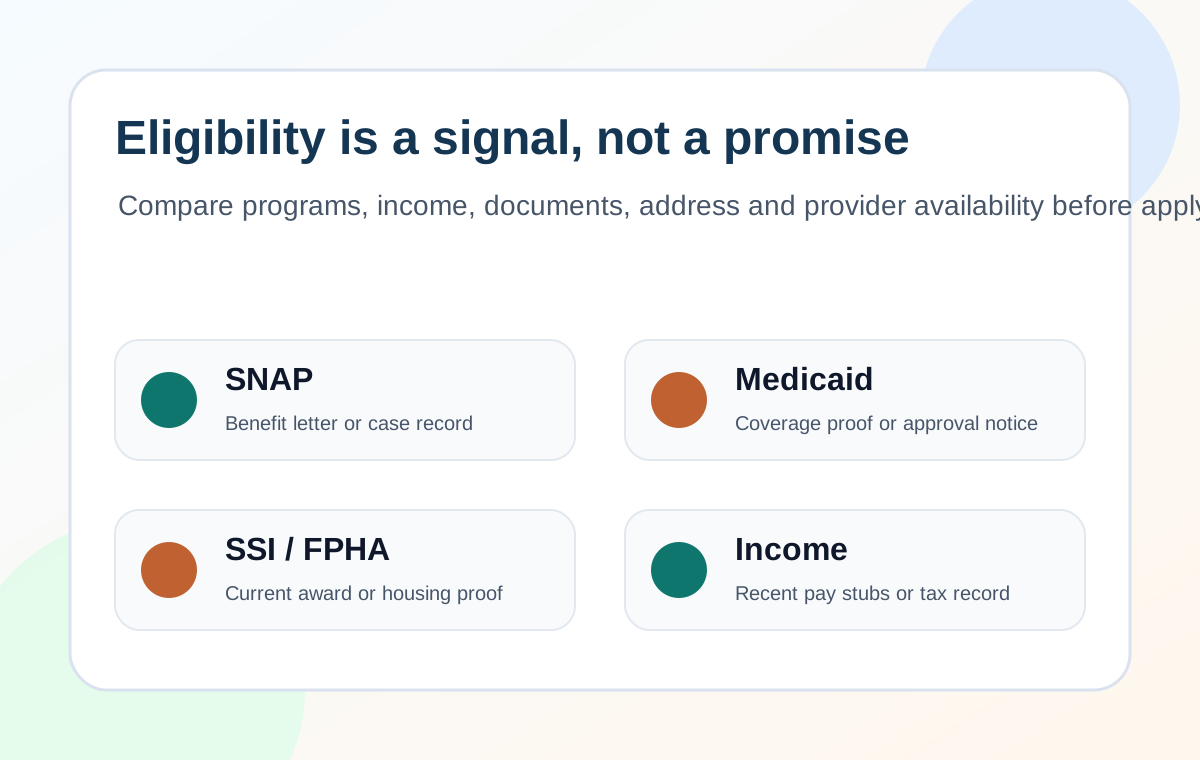
| Signal | What it may show | What to check before applying |
|---|---|---|
| SNAP | Participation in food assistance may support a program-based eligibility review. | Use current benefit proof. Make sure the name and household information match the application. |
| Medicaid | Medicaid participation may be accepted as a qualifying benefit signal. | Check whether the provider needs an approval notice, card, online record or other proof. |
| SSI | Supplemental Security Income may support eligibility for Lifeline-style checks. | Use current proof and confirm whether the provider accepts the document format you have. |
| Federal Public Housing Assistance | FPHA may help show program-based eligibility for some low-income support checks. | Confirm whether a lease, housing authority letter or benefit document is required. |
| Income-based eligibility | A household may qualify if income is within the current program limit. | Check the latest income chart and prepare acceptable proof such as pay stubs, tax documents or benefit statements. |
A current ID or accepted identity document may be requested to confirm the applicant’s name and date of birth.
A utility bill, lease, official letter or other accepted record may be needed to confirm service location.
SNAP, Medicaid, SSI or housing documents should be current and readable before upload.
If applying through income, the household may need pay stubs, tax documents or an official statement.
Some programs limit benefits to one per household, so household composition can matter.
Read device, activation, shipping, support and renewal terms before submitting personal documents.
The Affordable Connectivity Program ended in 2024, so households should not rely on old ACP device-credit information. Lifeline remains a separate program focused on making communication services more affordable for eligible consumers.
Provider device offers are separate from basic eligibility. A household may qualify for service support but still find that a tablet or specific device is unavailable, discounted with a co-pay or limited to certain locations.
Common signals include SNAP, Medicaid, SSI, Federal Public Housing Assistance or income within the current program limit.
No. Eligibility does not guarantee a specific device. Device availability depends on provider rules, ZIP code, inventory and any required payment.
Program rules, document requirements and provider offers can change. Checking current information helps reduce delays and confusion.